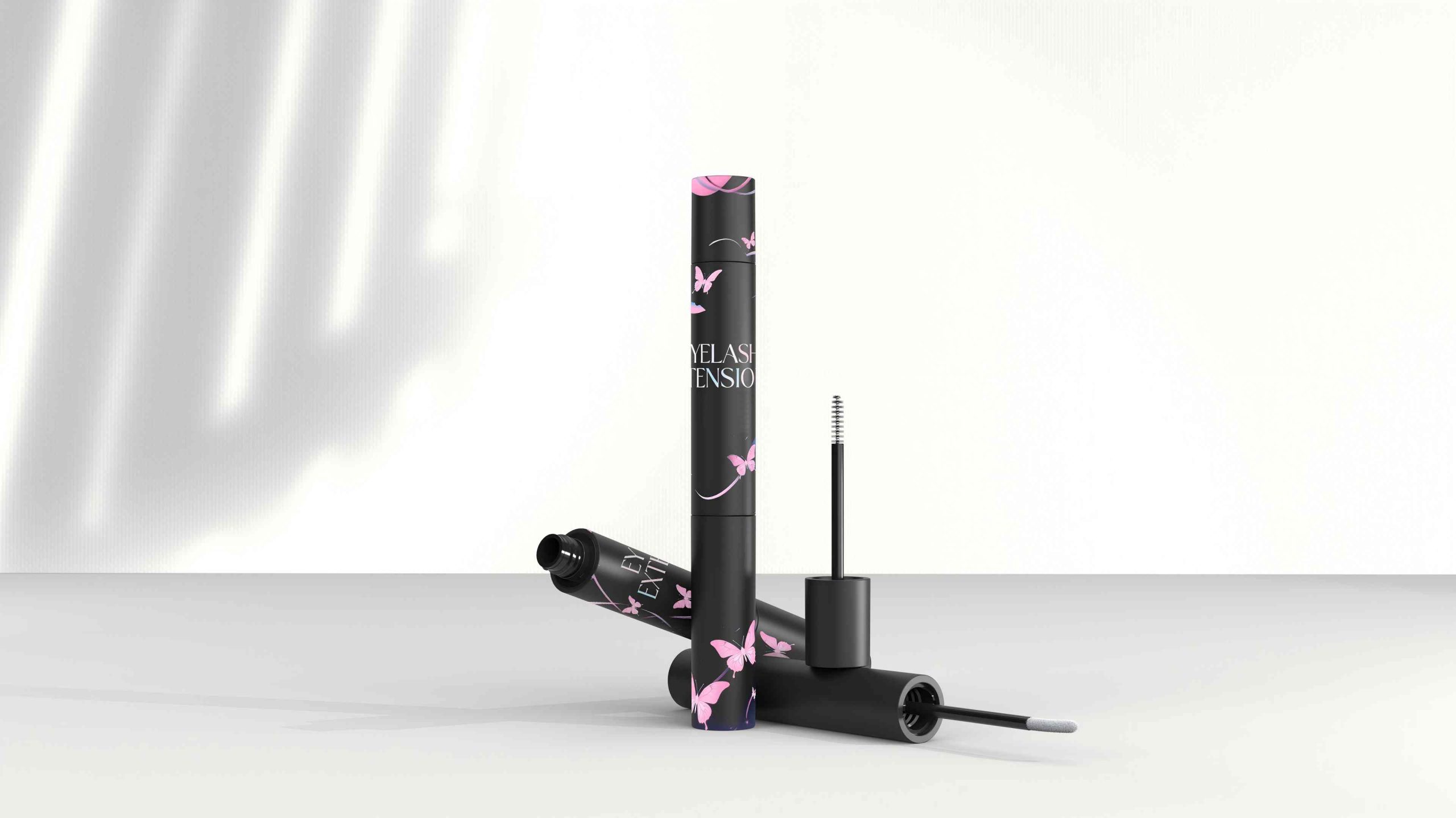
Eyeliner Bottle Logo Printing: A Clear Comparison and Selection Guide of 3 Processes
As the “facade” of beauty products, the printing effect of logos on eyeliner bottles directly affects brand recognition and user favorability. Considering the common materials of eyeliner bottles, such as plastic (ABS, PETG, PET, 82TR) and aluminum, as well as the requirements for wear resistance and solvent resistance (such as resistance to makeup remover and alcohol) in daily use, this article will compare three processes—screen printing, hot stamping (electrochemical aluminum hot stamping), and 3D printing—from three aspects: “process characteristics + applicable scenarios + advantages and disadvantages” to help you quickly select the appropriate process.
I. Screen Printing: The “Practical First Choice” for Mass-Produced Products with Cost-Effectiveness
1. Core Adaptation Advantages
- Strong material compatibility: It can stably adhere to the surface of plastic bottles (ABS, PETG, PET, 82TR, etc.) and aluminum bottles, adapting to the mainstream materials of eyeliner bottles. In addition, special two-component curing chemical-resistant ink can be selected. After curing, it can effectively resist the erosion of makeup remover and alcohol, and is not easy to fade or peel off due to daily friction.
- Controllable cost: When mass-produced (more than 10,000 pieces), the unit price will drop significantly, with outstanding cost performance. It is suitable for various eyeliner products that need large-scale distribution, not limited to mid-to-low-end products.
2. Applicable Scenarios
- Various mass-circulated eyeliner products, including over-the-counter products in supermarkets and beauty stores, as well as affordable lines of well-known brands.
- Suitable for logo designs that require solid colors or spot colors, or bottle designs with matte, transparent textures and regular curved surfaces (non-special irregular curved surfaces); not suitable for logo designs with delicate gradients or light color transitions.
3. Notes
- If the bottle has a special curved surface, such as a “wasp waist” or irregular curvature, special curved surface screen printing equipment and rubber heads must be customized; otherwise, problems such as logo double images and offset may occur.
- There are limitations in presenting fine thin lines: although mature technology can achieve mass production of 0.25mm thin lines, lines less than 0.3mm are still prone to thickening and breakpoints, making it unsuitable for ultra-fine logo designs.
II. Hot Stamping (Electrochemical Aluminum Hot Stamping): A “Texture-Enhancing Tool” for Mid-to-High-End Products
1. Core Adaptation Advantages
- Enhanced luxurious texture: Only applicable to hot stamping gold, silver, rose gold and other metallic colors on the surface of plastic bottles, which can form a strong contrast with the texture of the plastic bottle itself, instantly highlighting the high-end positioning of the product. It is suitable for various mid-to-high-end products that need to create a “luxurious” and “high-end” feeling; due to the material characteristics of aluminum bottles, hot stamping will have problems such as extremely poor adhesion, easy peeling, and high rejection rate, so it is not suitable for hot stamping process.
- Enhanced visual memory: The metallic luster of the hot stamping process is highly recognizable and eye-catching under light, especially suitable for gift box packaging and limited-edition products for festivals. It can effectively improve users’ willingness to give gifts and help the product stand out among similar products.
- Excellent weather resistance: High-quality special hot stamping foil for packaging materials has far better friction resistance, alcohol resistance and makeup remover resistance than ordinary screen printing ink, adapting to the high-frequency daily use scenario of eyeliner.
2. Applicable Scenarios
- Mid-to-high-end eyeliner products, such as star products, counter brands, and limited co-branded products. Hot stamping logos or decorations can further highlight the product grade and conform to the brand tone of high-end beauty products.
- Applicable to plastic bottles with regular curved surfaces, flat surfaces and irregular curved surfaces (such as wasp waist bottles), such as flat plastic bottles and irregular plastic eyeliner bottles, as well as simple and elegant logo designs (without complex color patterns)—at present, the curved surface hot stamping and rolling hot stamping technologies are very mature, which can stably realize hot stamping on irregular plastic bottles; simple logo designs can better highlight the metallic texture of hot stamping and avoid complex patterns covering the texture; due to the surface characteristics of aluminum bottles, stable hot stamping cannot be achieved, so this process should be avoided.
3. Notes
- Material adaptation is particular: Only applicable to plastic bottles (ABS, PETG, PET, 82TR, etc.). During hot stamping, it is necessary to match temperature control equipment, special soft electrochemical aluminum and buffer hot stamping rubber heads. It is not possible to avoid deformation only by relying on “low-temperature hot stamping foil”, and multiple links are required; aluminum bottles are not suitable for hot stamping process. Forced hot stamping will cause logo peeling and surface damage, affecting product texture and qualification rate.
- Higher cost than screen printing: Compared with screen printing, hot stamping has higher costs due to consumables (electrochemical aluminum) and equipment debugging, and the unit price for mass production is higher than that of screen printing. It is more suitable for products that focus on texture and have a certain profit margin.
III. 3D Printing: An Innovative Solution” for Personalized Products
1. Core Adaptation Advantages
- Unique three-dimensional effect: It can print raised logos with a height of 0.5-2 mm, with a unique touch and strong sense of hierarchy. It is suitable for creating differentiated designs and accurately attracting young consumer groups who pursue individuality, strengthening brand memory.
- Flexible customization: Exclusive logos (such as user names, limited edition numbers, and exclusive patterns) can be realized by modifying digital models, supporting small-batch customization without high mold costs, which is suitable for niche brands and co-branded products.
- Production efficiency suitable for mass production: It is a special assembly line process for beauty packaging materials. The printing of a single logo only takes seconds/milliseconds, which is not the slow process of traditional industrial 3D printing, and can meet the needs of small-batch mass production.
2. Applicable Scenarios
- Niche designer brands and co-branded eyeliner products that focus on “personalization” and “scarcity” and hope to create a competitive advantage through logo design.
- Applicable to plastic (ABS, PETG, PET, 82TR) and aluminum eyeliner bottles, as well as scenarios that need to convey brand tone (such as a sense of technology, art, and texture) through three-dimensional logos; aluminum bottles need to use special UV ink for aluminum materials to ensure adhesion and avoid ink peeling and falling off; hard resin bottles are rarely used in this process.
3. Notes
- Higher cost than screen printing and hot stamping: The equipment investment and consumable costs are relatively high. Although the production efficiency is better than that of traditional industrial 3D printing, it is still lower than screen printing and hot stamping, so it is not suitable for affordable products with large-scale distribution.
- Post-processing requirements: There may be slight layer lines on the surface after printing, which need to be polished and sprayed to improve the texture. In addition, solvent resistance testing must be carried out in advance. The surface ink is prone to corrosion, stickiness and peeling when in contact with alcohol and makeup remover, so a special solvent-resistant coating must be matched to avoid damage during use.