Why Is The Price of Lash Glue Packaging Material Rising?
For beauty brands relying on lash adhesive products, the steady rise in container raw material costs has become an unavoidable challenge. Studying lash adhesive container raw material price trends helps buyers grasp market volatility in advance. From PP plastic bottles to ABS premium containers, and even auxiliary components like rubber seals and applicator brushes, prices have surged by 10-30% in 2024 alone. This isn’t an isolated industry phenomenon—instead, it’s driven by a confluence of global economic shifts, policy changes, and supply chain disruptions. Below, we break down the five core reasons behind the price hike, backed by latest market data and industry insights to interpret real-world lash adhesive container raw material price trends.
1. Raw Material Cost Surge: The Foundation of Price Increases
Lash adhesive containers primarily rely on plastics like PP (Polypropylene), ABS (Acrylonitrile Butadiene Styrene), and PCR (Post-Consumer Recycled Plastic)—all derived from petroleum derivatives. Their prices are directly tied to global commodity markets, forming the base of current lash adhesive container raw material price trends:
ABS Price Spikes: Key raw materials for ABS, such as acrylonitrile, have risen by 1250 yuan/ton (~172 USD/ton) since October 2024, driving ABS prices up by 14-18% year-over-year. Common commercial ABS grades have seen average annual price increases exceeding 1400 yuan/ton (~193 USD/ton).
PP/PE Volatility: Influenced by crude oil price fluctuations (WTI crude ranged from 65.75 to 86.91 USD/barrel in 2024) and scheduled maintenance shutdowns at multiple large-scale petrochemical facilities across Asia, regional PP prices have stabilized at 7450-7580 yuan/ton (~1025–1043 USD/ton), a 5-8% increase from 2023.
Global “carbon neutrality” goals and stricter environmental regulations are reshaping the packaging industry, with compliance costs passed down to material prices and reshaping long-term lash adhesive container raw material price trends:
Regional Emission Reduction Rules: Global carbon reduction targets have forced high-energy-consumption plastic manufacturing plants worldwide to cut production output. New international logistics packaging regulations effective June 2025 mandate sustainable packaging solutions, pushing brands to adopt biodegradable or high-recycled-content materials—both more expensive to produce.
International Standards: The EU’s REACH and U.S. FDA requirements for low-VOC (volatile organic compounds) and food-contact-safe materials force manufacturers to switch from cheap solvent-based plastics to eco-friendly alternatives. For example, rubber coatings for lash adhesive containers now require water-based formulas, increasing material costs by 20-25%.
Waste Management Costs: Extended Producer Responsibility (EPR) schemes in Europe and North America require brands to fund plastic recycling, adding hidden costs to packaging procurement.This also led to lash adhesive container raw material price trends
3. Supply Chain Disruptions: Logistics and Production Pressures
Post-pandemic supply chain recovery remains uneven, with logistics and production bottlenecks driving up costs and creating short-term volatility within lash adhesive container raw material price trends:
International Shipping Hikes: IATA’s 2024 new regulations classify lash adhesive packaging (especially aerosol containers) as hazardous goods, increasing transportation costs by 18%. Cold chain logistics for eco-friendly materials has seen a 15% price surge, while port congestion delays add 4-5 days of storage fees on average.
Production Constraints: Planned maintenance turnarounds at several major Asian petrochemical complexes have tightened market supply of ABS and PP resin. Meanwhile, booming global home appliance manufacturing (air conditioner production up 31.7% year-over-year) competes for high-grade plastic feedstock, creating limited availability for lash packaging manufacturers.
Import Dependence Risks: High-end lash adhesive containers rely on specialty resins and curing agents imported from Japan and Germany. Exchange rate fluctuations and 15% U.S. tariffs on cosmetic packaging have increased import costs by 10-12%.
4. Surging Market Demand: Supply-Demand Imbalance
The lash adhesive market’s explosive growth has outpaced packaging material production capacity, becoming a core demand-side factor altering lash adhesive container raw material price trends:
Industry Expansion: The global lash adhesive market is expected to reach $1.5 billion in 2025, with Chinese manufacturing output accounting for 35% of global supply. This surge in demand has led to a 20% year-over-year increase in packaging material orders, creating supply shortages.
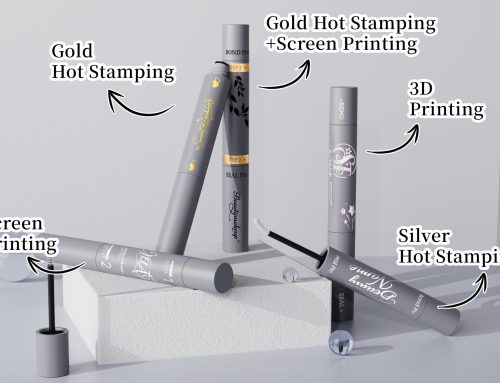
Premiumization Trend: Consumers increasingly prefer high-end packaging (e.g., rubber-coated ABS containers, metallic-finish containers). These require complex production processes (e.g., hot stamping, 3D printing) that add 30-40% to material costs compared to basic plastic containers.
Customization Needs: Brands are demanding personalized packaging (custom colors, logos, shapes) to stand out, which reduces production economies of scale and drives up per-unit material prices.
5. Compliance and Quality Upgrades: Hidden Cost Drivers
Lash adhesive’s proximity to the eyes requires stricter packaging quality standards, adding to material costs and supporting the upward movement seen in lash adhesive container raw material price trends:
Safety Certifications: Packaging must pass FDA food-contact tests and EU CPNP notifications. Materials need anti-leakage, solvent-resistant, and non-toxic properties—for example, PP containers require special pre-treatment to resist cyanoacrylate (lash adhesive’s core ingredient), increasing production costs by 15%.
Durability Requirements: Frequent handling (opening/closing, on-the-go use) demands scratch-resistant and impact-proof materials. ABS containers, which offer better durability than PP, now account for 40% of lash adhesive packaging—up from 25% in 2023—lifting average material costs.
Anti-Counterfeiting Features: Brands are adding holographic labels or laser-engraved logos, requiring specialized materials and processes that further increase costs.
6. What Can Brands Do to Mitigate the Impact?
While price hikes are inevitable amid shifting lash adhesive container raw material price trends, strategic sourcing can help control costs:
Long-Term Supplier Partnerships: Collaborate with manufacturers offering stable supply chains (e.g., those with integrated raw material production) to lock in prices for 6-12 months.
Material Optimization: Balance sustainability and cost by using 30-50% PCR content (instead of 100%) or switching to PP-ABS blends for mid-range products.
Bulk Procurement: Consolidate orders to leverage economies of scale—many suppliers offer 5-10% discounts for large-volume purchases.
One-Stop Sourcing: Choose suppliers that provide integrated packaging solutions (containers, applicators, labels) to reduce logistics and coordination costs.
7. Partner With Us for Stable, Cost-Effective Packaging Solutions
We understand the challenges brought by fluctuating lash adhesive container raw material price trends. Our practical strengths help you navigate the volatile market steadily:
Stable Supply Chain: We maintain long-term direct cooperation with major petrochemical manufacturers across Asia to guarantee steady supply of PP, ABS and PCR raw materials, and we support long-term price locking agreements to avoid frequent cost fluctuations.
Customized Eco-Friendly Options: We can develop cost-effective water-based coating treatments and recycled material formulations according to your actual needs, matching mainstream global environmental packaging trends while controlling your overall procurement expenditure.
Strict In-House Quality Control: We carry out complete internal inspection procedures targeting leak resistance, solvent compatibility and structural durability of lash adhesive containers, ensuring stable consistent quality for mass production orders.
Customization Flexibility: We support personalized custom sizes, colors and logo printing with a low MOQ of 50 units, helping you realize differentiated packaging design while keeping your unit cost under control.